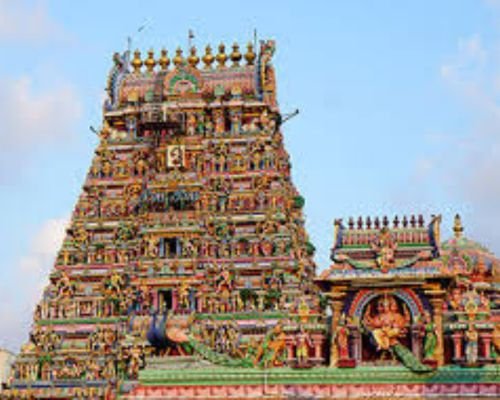
On completion with immigration formalities, luggage collection and custom clearance proceed towards the exit, where you will be met our representative and transferred to the hotel. Chennai formerly was referred to as Madras which grew around Fort St. George, built by the British in 1640. After breakfast, proceed to Kapaleeswarar Temple dedicated to Lord Shiva. It is one of the most ancient temples built around the 7th century CE by the ruling Pallavas, whose architecture is Dravidian. Continue on to San Thome Cathedral, built in the 16th century by Portuguese explorers and re-built by the British as a cathedral in 1893. Stay overnight at the hotel.
After breakfast, drive overland to Mamallapuram, roughly a 1 ½ hour drive. Enroute, visit Cholamandal Artists' Village, the largest artists' commune in India. Its artists are credited for bringing modernism to South Indian art. We will proceed with our drive to Mahabalipuram. On arrival, we will be transferred to the hotel. Mamallapuram or Seven Pagodas or Mahabalipuram was one of two major port cities by the 7th century within the Pallava kingdom. Along with economic prosperity, it became a center for a group of battle monuments carved out of rock. This afternoon, visit Arjuna’s Penance (Bass Relief), a giant open-air relief carved out of a monolithic rock. Next, see the Five Rathas or Pancha Rathas, an example of monolith Indian rock cut architecture dating from the late 7th century. Proceed to the famous Shore Temples (700-728 AD), so named as it overlooks the Bay of Bengal. Last stop will be at a Sculpture Studio, to learn and understand the finer details relating to sculpting including an interactive session with a sculptor.
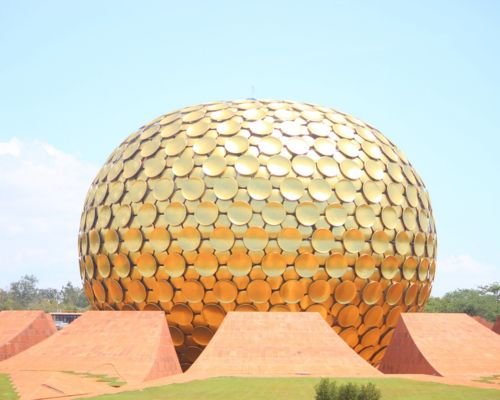
Early this morning, partake in a yoga session for 45 minutes. Later after breakfast, travel overland to Puducherry, roughly a 02-hour drive. Enroute, stop at a Salt Extraction Unit, to see and learn how salt is produced. India is the world’s third largest producer of salt. Continue with our drive to Puducherry. On arrival, you will be transferred to the hotel. In September 2006, the territory changed its official name from Pondicherry to its original name, Puducherry, meaning "new village". This city is referred to as The French Riviera of the East, whose history can be traced back to the 2nd century. Rest of the day will be at leisure. You may like to visit the promenade and mingle with the locals. If you like, visit Baker's Street, a bakery run by a French man who sells the most delicious cheese baguettes, quiches and freshly baked bread, as well as éclairs and fruit tarts.
Early this morning, on the hotel’s terrace, partake in a private Meditation and Yoga session by a guru. Later the walking tour commences with the "White" or the "French" town area. We will visit an Old French Bungalow, now a quaint guest house called Dumas Guest House. Dumas Guest House is a 19th century Colonial Heritage Guest House located in a quiet neighborhood of the French Quarter. Proceed to the French Consulate, a short walk to Sri Aurobindo Ashram, founded by Sri Aurobindo on November 24, 1926 (Siddhi Day). Continue to Foyer Du Soldat, the legion hall for retired soldiers from Puducherry. Later proceed to Puducherry Art and Craft Village. Choose the art or the craft that calls to you and enroll to develop your skills. Next visit The Lycee Francais de Pondichery (subject to permission), one of the most important French high schools outside France. Last stop before lunch will be at Maison Perumal. After lunch, we will explore the black town, crossing the sewage canal that separates it from the white town. Visit an old Tamil building to understand South Indian architecture. Then see The Dune, previously known as The Calve. The Goubert Market or Grand Bazaar is the largest covered market in Pondicherry. Later visit the Art and Craft village run by the Govt. of Pondicherry, located in Murungapakkam.
Early this morning, it will be a feast to your eyes to watch Kolam Art, being performed at the hotel premises. After breakfast, travel overland to Kumbakonam, roughly a 2-hour drive. Enroute, visit Chidambaram, believed to be of significant antiquity and has been ruled by the Medieval Cholas, Later Cholas, Later Pandyas, Vijayanagar Empire, Marathas, and the British. Visit Thillai Nataraja Temple, dedicated to Lord Shiva, one of the foremost temples in Shaivism. Visit a pottery making place and try your hand at this ancient art. We will stop at an agricultural farm-land to take pictures and learn about local crops and agricultural facts of South India. Later drive to Kumbakonam. On arrival, we will be transferred to the hotel.
Your morning Yoga session begins with a Vedic chant, a meditative practice rich in spiritual tradition, performed by scholars from the Raja Veda Kavya Patasala. As the chorus of voices fills the hall, these ancient words reverberate through the space, creating a spiritually uplifting atmosphere. The energy in the room becomes charged with divine vibrations, elevating your Yoga and meditation experience. The rest of the day is at leisure. After lunch, enjoy a private Bharatanatyam dance performance followed by an informal dance session. Stay overnight at the hotel.
After breakfast, drive to Chettinad (approx. 3 hours). En route, visit the Brihadeeswarar Temple in Thanjavur, dedicated to Lord Shiva — one of the largest temples in India and a prime example of Chola-period Dravidian architecture. Next, explore the Palace Museum reflecting Maratha and Nayak art patronage, followed by the Saraswati Mahal Library (TMSSML), one of Asia’s oldest. Witness the lost wax casting technique by the “Sthapathis”, artisans who settled during Raja Chola’s time. Visit their workshop to observe the intricate process of bronze sculpture creation. Continue to Chettinad, home of the Nattukottai Chettiars since the 13th century.
Begin your day with a walking tour of Chettinad, experiencing village life at sunrise. Visit the 110-year-old Chettinad Palace, built by Dr. Annamalai Chettiar, founder of Indian Bank and Annamalai University. See majestic homes that once housed large joint families. Enjoy a local coffee shop interaction to understand Chettinad life. Post-breakfast, visit a craftsman to learn how Athangudi tiles are made. Then, visit a non-profit involved in preserving local crafts and architecture. If available, meet Mrs. Meenakshi Meyyappa Chettiar at “The Bangala”, the region’s first heritage hotel built on a family property over 100 years old. Overnight at the hotel.
After breakfast, drive to Madurai (approx. 2 hours). According to legend, Lord Shiva blessed the land, and divine nectar — “Madhura” — rained down, giving the city its name, Madhurapuri. Visit a village to witness the clay idol-making process and try your hand at the potter’s wheel. Discover the Sungudi textiles of Madurai, known for their natural dye tie-dye technique. Continue to Periyar (approx. 3.5 hours), a wildlife sanctuary known for its evergreen forests and home to elephants, tigers, sambar, and more. Learn about the area’s rich spice history. Stay overnight in Thekkady.
Start the day with a nature walk in the Periyar Reserve with a naturalist — ask how former poachers became conservationists. Later, enjoy a boat safari to spot elephants and other wildlife. In the afternoon, participate in a tea-tasting session led by a professional tea taster, who will also share insights into tea's role in India’s trade history. Stay overnight at the hotel.
After breakfast, drive to Kumarakom (approx. 4 hours). En route, stop at a spice plantation to learn about Kerala’s famed spices. Enjoy a 45-minute expert lecture on Kerala’s spice history and its global trade significance. Continue to Kumarakom, a village on reclaimed land from the Vembanad Lake. Transfer to your hotel for overnight stay.
After breakfast, visit a local home and be welcomed by women musicians. Learn to create a “Pookalam” — a traditional floral art form. Later, enjoy a “Sadhya” — a grand vegetarian feast served on banana leaves. Attend a tabla demonstration at your hotel and try learning basic rhythms. In the evening, enjoy a serene private sunset cruise with flute music on Vembanad Lake. Return and stay overnight at the hotel.
After an early breakfast, drive to Mannarasala (approx. 2 hours) and visit the Sree Nagaraja Temple. Witness the unique “Pulluvan Pattu” (Serpent Song) and “Sarpam Thullal” ritual dances. Continue to Alleppey for a walking tour with Mrs. Rani John of Preserve Alleppey Society, covering the Gujarati Quarter, canal banks, and old markets. Enjoy a historical presentation at the Society Gallery. Later, drive to Kochi (approx. 1.5 to 2 hours) and transfer to the hotel. Kochi, dubbed “Queen of the Arabian Sea”, is a historic trade hub and cultural gateway to Kerala. Stay overnight.
Late morning, visit St. Francis Church, originally built in 1503 — the oldest European church in India, which silently witnessed the colonial struggles on the subcontinent. Then, visit the Santa Cruz Basilica, initially constructed by the Portuguese and elevated to a Cathedral by Pope Paul IV in 1558. The Basilica was spared destruction by the Dutch, unlike many other Catholic buildings. See the iconic Chinese Fishing Nets, believed to have been introduced by Zheng He, a Chinese explorer from the court of Emperor Kublai Khan — a unique method of shore-operated lift-net fishing.
Proceed to the Paradesi Synagogue, the oldest synagogue in the Commonwealth of Nations, built in 1568 by the Malabar Yehudan (Cochin Jewish community) in the Kingdom of Cochin. Before returning to the hotel, explore Mattancherry Market by tuk-tuk (auto rickshaw). The bustling spice market is filled with small stores in crumbling old buildings, the air infused with the pungent aroma of ginger, cardamom, cumin, turmeric, and cloves.
Early this evening, board a private motorboat for a one-hour leisurely sunset cruise — a photographer’s delight — as you sip non-alcoholic beverages and enjoy light snacks. Later, attend a private Tholpavakoothu performance, a shadow puppet theatre native to Kerala. Dedicated to Goddess Bhadrakali, it is performed with leather puppets in specially built temple theatres called Koothumadams. Stay overnight at the hotel.
After breakfast, embark on the Muziris Heritage Tour. Muziris, an ancient port city an hour north of Kochi, once thrived as a major center of trade in spices, silk, and precious stones with ancient Rome, Greece, and Egypt.
Begin with the Chendamangalam Synagogue, built in the 17th century. Visit the ruins of the Vypeekotta Seminary, established by the Portuguese to train priests of Malabar — also the site of India’s first printing press. Continue to the Kottakavu Church, believed to be one of seven churches established by St. Thomas in 52 AD.
En route, enjoy lunch at Sea Shore Residency. Afterward, visit the Nalukettu Museum, which showcases the architecture and traditions of Kerala’s feudal era, including the matrilineal inheritance system. Finally, visit the Cheraman Juma Mosque, India’s first mosque, built in 629 AD by Malik Deenar, an Arab missionary. Return to your hotel in Kochi.
After breakfast, meet the coordinator for the cultural activities at Greenix, Fort Kochi. Where you can witness cultural performances like Kathakali and Kerala Kaleidoscope, a museum with a focus on dying arts, and a Kalaripayattu training center and ongoing exhibitions. Later meet a concerned authority and discuss women’s role and their empowerment in the present scenario and the restrictions imposed upon women at Sabarimala Temple. Enjoy an hour-long cruise on the Cinnamon Coast, a stylish luxury yacht accompanied by lovely high tea, cookies, muffins, sandwiches, light beverages, tea and coffee makes a rather delightful experience. The breathtaking views of the sea and the sunset leave you spellbound and enchanted by the beauty of Cochin. Return to the hotel for overnight stay.
On-time transfer to the airport to board your flight for your return journey.