
Upon arrival in India and on completion of immigration formalities, luggage collection, and customs clearance, please proceed to the exit, where you will be met by our representative and escorted to your hotel. New Delhi, or the Lutyens’ Delhi as you may call it, reflects the legacy the British left behind, while Old Delhi is the most historic part of the metropolis, with its origins dating back to the time of the Mughals.
Morning after breakfast, enjoy a short metro ride to one of the Old Delhi metro stations. Later, explore Old Delhi with its narrow dirt roads, myriad people, and inexpensive and colorful bazaars that keep alive the traditional workmanship for which Delhi has always been famous. The first stop is at the Raj Ghat (the cremation ground of Mahatma Gandhi). Driving past the Red Fort (we will visit the more elaborate Red Fort in Agra), we trade our motor vehicles for bicycle rickshaws, which will take us into the heart of Chandni Chowk (the silver square – so named because of the silver merchants). Negotiating alleyways, which seemingly get narrower and narrower, we end up at the Jama Masjid, the largest Muslim mosque in India. Post-lunch, explore New Delhi – the capital city of modern India. New Delhi is a well-laid-out metropolitan area built by the British when they moved their capital here from Calcutta in 1911. It blends internationalism and tradition, with many interesting museums and art galleries. We will drive past the President’s Palace and India Gate in the Lutyens’ Imperial City and visit the Qutub Minar and Humayun’s Tomb that pay homage to the mighty Afghan and Mughal Empires. Overnight at the hotel.
It is said that Varanasi is older than history, older than tradition, older even than legend. Varanasi is a city that cannot be described but only experienced. This holy Hindu city is studded with temples, and its labyrinth of streets with their throngs of people is exciting and enticing. This evening, witness the Aarti ceremony at Dashashwamedh Ghat.
Early morning, embark on a boat ride on the River Ganges to enjoy the sunrise and to witness the pilgrims worshipping the Sun God and other devotional activities by the pilgrims, Sadhus, widows, priests, etc. Also, visit the 18th-century Golden Temple or the Kashi Vishwanath Temple, dedicated to Lord Shiva. It is known as the Golden Temple because of its gold-plated structure/dome. Return to your hotel to freshen up and have breakfast. After breakfast: Visit Kushti Wrestling Gym (known as Akhara) at Tulsi Ghat on the Ganges. Akharas have always been an integral part of Varanasi's culture and wrestlers who have come out of these Akharas. Akharas are a symbol of Sanatan Dharma (an alternate term to signify Hindu religion), culture, and the social organization of Hindu religion. Every Akhara has an organizational structure and hierarchy among its members. Later, visit Sarnath, where Lord Buddha preached his first sermon after his enlightenment. Visit the museum to see its fine collection of Buddhist artifacts. Post-lunch, proceed for a walking tour of the old city, passing through the lanes and by-lanes of Varanasi, along different temples, the local market, old British buildings, and unique architecture. Later, return to the alley of Ghats to stroll along with your guide, where you can see numerous people engaged in different religious activities: • Mundan (shaving off young boys/girls, a ritual performed on children between the age of 1–3) • Janeu Sanskar (sacred thread ceremony – it is believed that this empowers the Hindu male to gain knowledge and uphold moral values) • Shradh Karm (unconditional reverence to the ancestors and rekindling the holy spirits of their forefathers) • Astrology, Palmistry, discussions with Pandits on life issues, problems, and solutions. Your guide will keep explaining the activities and the religious reasons behind them. Later, return to the hotel for meals and overnight stay.
Morning transfer to airport to fly to Rishikesh. Arrive by evening. Met and transferred to hotel.
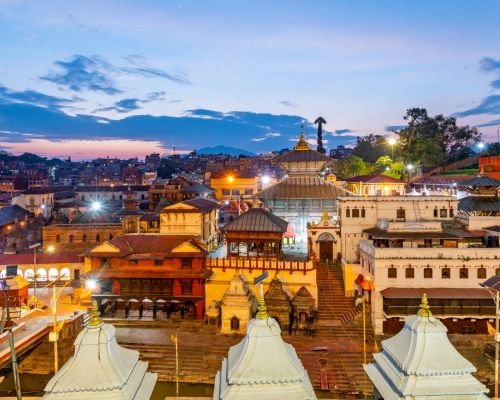
Afterbreakfast, embark on awalkingtourof Rishikesh, the templecity visitingLakshmanJhula a suspension bridge across the river Ganges, connecting two villages of Tapovan in Tehri Garhwal Jonk in Pauri Garhwal. It is said that the Hindu deity Lakshman crossed the Ganges on juteropes where today this bridge (Jhula) stands. Next visit Ram Jhula an iron suspension bridge across the river Ganges, Trayambakeshwar temple one of important holy shrines in Rishikesh, Parmarth Niketan an ashram founded in 1942 by Pujya Swami Shukdevanandji Maharaj, largest ashram in Rishikesh with over 1000 rooms, Swargashram built in the memory of Swami Vishudhanand, the saint better known as Kali Kamli Wala (the Sain with a black blanket), Gita Bhawan a huge complex with several discourse halls. Evening participate in the Aarti ceremony at Triveni Ghat on River Ganges. The aarti takes place in the midst of chanting of bhajans, beating of drums and bells, lighting of oil diyas, putting them on flower-filled leaf boats and releasing in the holy waters of the river Ganges. The entire Ghat area/gets illuminated, with millions of lamps all over. Return to Ashram and Overnight stay .
After breakfast check out fromAshram and drive to hotel Lemon tree ,Rishikesh and check in. Later , proceed to half day excursion to Cave Vasishtha – 20 kms from the downtown.Vasishtha Cave is an ancient cave located on Rishikesh — Badrinath road, situated on the banks of the Ganga River, is a great place for meditation. This is the cave where great Sage Vasishthasaid to have meditated, who is among the seven great sages (Saptarishis) and the guru of Lord Ram. It is a natural formation of 60 feet deep that has a Shiv Linga inclined vertically into the cave opening. This cave is situated in the middle of a grove of Gular (Ficus) trees and the slopes leading to sacred River Ganga. To reach this cave, one has to climb around 200 steps. Also visit The Beatles Ashram is also called Chaurasi Kutia near the bank Ganga River in Rishikesh, founded in 1963 by Maharishi Mahesh Yogi and gained popularity in 1968 as The Beatles and various other famous people came to study meditation there. They composed a lot of songs when they were there, that appear on albums like "The White Album" and "Abbey Road." The ashram closed in the 1990s, was officially opened in 2015 and is now open to the public, showing the deep effect of The Beatles' songs. Its also known as Chaurasi Kutia, meaning "84 cottages," as it offers 84 individual spaces for spiritual meditation seekers to find their own path.
After early breakfast, embark on a full day tour of Haridwar.Enjoy a jeep safari into Rajaji National Park, enroute to Rishikesh. More than 50 species of mammals including the highly endangered Asian Elephant and Tiger found in the Park. Besides tiger, leopard, Himalayan Black bear, sloth bear, Civet, Marten, Jackal, Hyena etc., it is estimated that there are more than 350Asian elephants in the park. Goral (Mountain Goat) - a characteristic mammals of the lower Himalayas abound in the precipitous slopes of the Shivalik hills. Three species of deer - Sambhar, Spotted Deer (Cheetal) and Barking Deer (Kakar) and animals like Wild Boar, Neel Gai. Langoor, Black Napped Hare, Jungle cat etc. are also found. Afternoon drive to Haridwar. Visit Mansa Devi temple, known for being the holy abode of Mansa, a form of Shakti. Enjoy rope way ride to and from the temple. Next visit Daksh Mahadev temple, named after King Daksha Prajapati, Sati’s father. Enjoy Lunch at the local restaurant on your own. Following lunch visit Chandi Devi temple a Hindu temple dedicated to Goddess Chandi, situatedatoptheNeelParvat(hilltop).Freetimeto explorethemarket.Shoporphotographthe pilgrims coming from all over India.In the evening visit Har Ki Pauri where you will witness the majestic aarti ceremony on theghat. It is a prayer dedicated to River Ganga, the holiest river of India, considered like a Goddess.The aarti starts with the priest holding large fire bowls in their hands, the bells in the temples at the Ghat start ringing and the chants of mantras flowing out in the air. People float diyas with flowers in the Ganga River. The shadow reflecting on the river and lighting diyas on flowing Ganga looks charismatic. AfterthetouryouwillbetransferredbacktothehotelinRishikesh.Stayovernightatthe hotel.
Morning free for own activities.Afternoon take a super-fast tourist train toAmritsar.Amritsar is a 400-year-old city, founded by the 4th guru of the Sikhs, Guru Ramdas, has been the seat of the Sikh religion and culture from its very inception. Arrive and check into the hotel for meals and overnight stay.
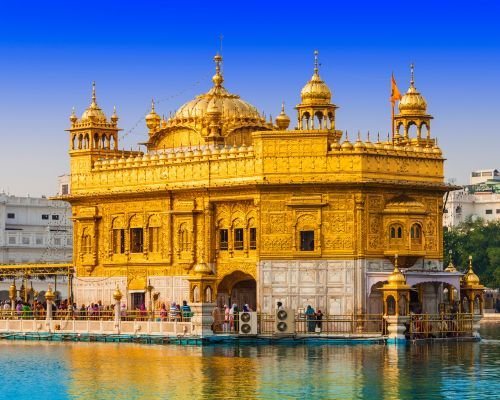
After a short rest at the hotel, a tour of Amritsar, visiting Golden temple, Jalia Wala Bagh etc. After breakfast, you will embark on a tour of the Golden Temple built in the middle of the holy pool by Maharaja Ranjit Singh in 1803. It is also known as Darbar Sahib or Har Mandir Sahib. The dome of the temple is covered with an estimated 400 kilograms of gold leaf, also knownasthe‘GoldenTemple’.Theinteriorsofthetemplearedecoratedwithinlaywork,delicatefloral patterns of semi-precious stones.Adjoining the pool isAkal Takht, established by the 6th Sikh guru, Guru Hargobind Singh. It is the seat of the supreme head of the Sikh religious authority. Continue to Jallianwala Bagh where hundreds of innocent Indian men, women and children were massacred by the then British General Michael Dyer on April 13, 1919. A memorial and garden have been created here as a national monument. Late afternoon visit Wagah Border, every evening, armed soldiers from each side enact hostile parade while lowering their respective flags to the sounds of the bugles. In the past recent years, the exchanges have become moderate, where soldiers shake hands prior to closing the border gates. This is due to the improved relationship between India and Pakistan. Returntothecityforanovernight atthehotel.
Morning drive to Dharamshala, the home to HH Dalai Lama. Nestled in the mystic hills of Himachal Pradesh, Dharamshala and McLeod Ganj is a place uniquely blended with Tibetan, British and Himachali cultures. Arrive and check into hotel. Afternoon proceed for sight-seeing of Dharmashala, visiting Dalai Lama temple complex and later Tibetian Musuem. The Dalai Lama Temple Complex is also known as Tsuglagkhang Complex, a sacred place of worship, learning, and cultural significance. Visit the main temple houses a stunning 15-foot-high bronze statue of the Buddha, surrounded by vibrant murals and intricate carvings. Overnight stay at Dharamshala.
Resume your sight seeing of Dharamshala : Visit Dalai Lama's Residence: The official residence of the 14th Dalai Lama, which can be viewed from outside only. Proceed to visit Tibetan Museum, showcasing the history, art, and culture of Tibet, with exhibits on the Dalai Lama's life and teachings. You can also see the Prayer Wheels and Spin the same, inscribed with sacred mantras, for spiritual merit and a sense of peace. The Garden and Courtyard inside is a great place to stroll through and feel the Buddhistic pure vibes. Note : Darshan of Dalai Lama is not guaranteed & depends on his schedule
On time fly to Delhi and take connecting fight to your country back home.
Morning drive to Harike Wetland and Bird Sanctuary, 60 kms from Amritsar town, is a great place to unwind and connect with nature. isa man-made wetland and is the largest in northern India, covering an area of 4100 hectares. The sanctuaryboasts rich biodiversity, with around375speciesof birds andseveralspecies of amphibians, turtles, reptiles, and mammals. Some of the most commonly spotted birds here include the Indian skimmer, northern pintail, black-necked stork, great crested grebe, and common coot. Besides birds, the sanctuary is home to various animals, including the Indian jackal, smooth-coated otter, and wild boar.Later tour Partition Museum recently opened, Durgyana temple and the summer palace of Maharaja Ranjeet sigh.EveningenjoyPunjabifoodandspainthehotel.(Onyourown)
Morning proceed for a village tour : Meet the local village family and interact with them to learning their lifestyle, enjoy cooking and learning local Punjabi dishes, Learning Bhangra Punjabi dance steps, learning to tie Turban like a Sikh, watching the Punjabi style martial art, visiting the farm land and learning how agriculture is done in the villages. Post-lunch, explore New Delhi – the capital city of modern India. New Delhi is a well-laid-out metropolitan area built by the British when they moved their capital here from Calcutta in 1911. It blends internationalism and tradition, with many interesting museums and art galleries. We will drive past the President’s Palace and India Gate in the Lutyens’ Imperial City and visit the Qutub Minar and Humayun’s Tomb that pay homage to the mighty Afghan and Mughal Empires. Overnight at the hotel.
Ashram option : After all the formalities and understanding the lifestyle and food culture of the Ashram, relax for the rest of the time. Explore the Ashram and exchange ideas and concept of the Ashram. Speaking of the Ashram routine, the students/ discipleswake up as early as 4AM in the morning, followed by a daily one-hour meditation class.Throughout the day, the students have to attend various lectures learning about Indian scriptures like Bhagwat Gita and Upanishads. Other than that, one learns about Indian and Western philosophy and study what the many great philosophers like Aristotle and Adi Shankara once said and preached. The ashram life teaches about discipline and persistence, while integrating one’s personality in a way that makes one successful.
Participation:Guestsshouldparticipateinallyogaandmeditationactivities. Prohibited substances:Guests should not smoke, consume alcohol, meat, onion, garlic, or any other intoxicants. Cleanliness:Guestsshouldkeeptheiraccommodationscleanandtidy. Respect:Guests should be on time for programs and stay for the duration as a sign of respect for the teacher and self-discipline.MealsareservedonlyintheDining Hall. AllresidentsmustbebackintheirAshramroomby21:30hrs,beforethegatescloseinthe night.
Rishikesh is a popular destination for river rafting, offering various stretches on the Ganga River, ranging from beginner-friendly to more challenging experiences. The most common rafting stretches include Brahmpuri to Rishikesh (9 km), Shivpuri to Rishikesh (16 km), and Marine Drive to Rishikesh (26 km). Kaudiyala is known for its longer and more intense rafting trip.Duration : March to September.
Most of the hotels in Rishikesh undertakes group yoga sessions at a fixed time, in the morning on complimentary basis.
05:00 AM: Early this morning, drive to Kunjapuri, roughly a one-hour drive, located in the green forested hills, at a height of 1,645 Meters from Rishikesh. Steeped in the echoing silence, the shrine is one of the many seats of Shakti, the Mother Goddess. Witness the majestic sunrise over the deep valley from the hilltop. Enjoy box breakfast and hot tea prior to your trek downhill, taking roughly 3 ½ hours. You will be crossing various mountain villages. Meet with the local villagers, to learn about their daily life. Relax and enjoy the Gaddu Waterfalls before returning to the hotel for lunch.
The trek to Neelkanth Mahadev Temple in Rishikesh is quite enjoyable. Its quite a spiritual and scenic journey, typically 12 km long and takes 4-5 hours, one way. The temple is dedicated to Lord Shiva, situated on a hill at an elevation of 1330 meters, surrounded by dense forests. It is not a difficult trek and can be done by a normal healthy person.
Veg THALI MEAL with wholesome balanced traditional Indian flavour at some of the famous restaurants in Varanasi. Indian classical with Dev VratMishra :He is the co-founder of the Academy of Indian Classical Music in 1999 and has worked with international ensembles. His accolades include the Best German Critics Award, the Visionary Award for World Music, and a Grammy Award consideration in 2022. Evening boat ride on a well decorated boat with live instrumental musicians on board. Special welcome with chanting of mantras by the priests, Chandan tika on the forehead and garlanding, before taking the boat ride on river ganges. Textile tour of Varanasi:After Breakfast proceed to textile village of Madanpura (within the city) weaves traditional designs and is known for its sophisticated use of colors and textures and concentration on light transparent materials. The most outstanding examples are jamdani, organza, tissue saris or dupattas with konia or kairi, the stylised mango pattern at each of the corners; and a big circular pattern called chand, moon-shaped, in the centre, with diagonal creepers, arijhari, or dotted butis. Literary references and travelers mention that turbans for the Mughal emperors and other native rulers were woven at Varanasi and later visit to alaipura (30 minutes drive) produced heavy brocades. The weavers adapted their techniques to meet regional demands, keeping pace with changing fashions and designs. The master weavers of Alaipura can also be credited for weaving some of the brocade designs, which were on the verge of extinction in their own regions. Also see the rustic life around these two villages. Photographers delight: Capture village life and it’s rustic beauty, the wells, the fields, the hamlets, local men, women, farmers, children and cattle and also the textile layout in these villages.