
Intense Wildlife

  • Home
  • Intense Wildlife


Wildlife Tour: General useful information

  • Ideally one should stay for 3 Nights at each Tiger Reserves, giving sufficient time to understand and feel the parks and its wildlife existence. However, if you have lesser time in hand or you wish to cover more of Tiger Reserves and National Parks, you may as well stay for 2 nights at each wildlife Parks. This will normally give you time for 3 safaris at each place, At the end of the marathon wildlife visits, if you wish to relax you can opt for Goa beaches, or go for Golden Triangle tour (if India is your first time).
  • Normally, duringmonsoon time either National Parks and Wildlife sanctuaries are completely closed or partially closed. Some buffer zones are open during monsoon period. Parks in South India are open throughout the year in most of the cases. Best is to check before you make you plans. October to March is the best time to visit wildlife Parks when all parks are open and all zones are operational.
  • Also, jeep/ jungle safaris can be booked well in advance as most of the bookings are open as early as 365 days in advance. It can be booked against passport copies and full advance payment. Due to limited vehicle inventory in most of the Parks, it is advisable to book your safari at the earliest possible.
  • Parks are partially(core zone) or fully (Core and Buffer zone) closed on certain days in certain Parks
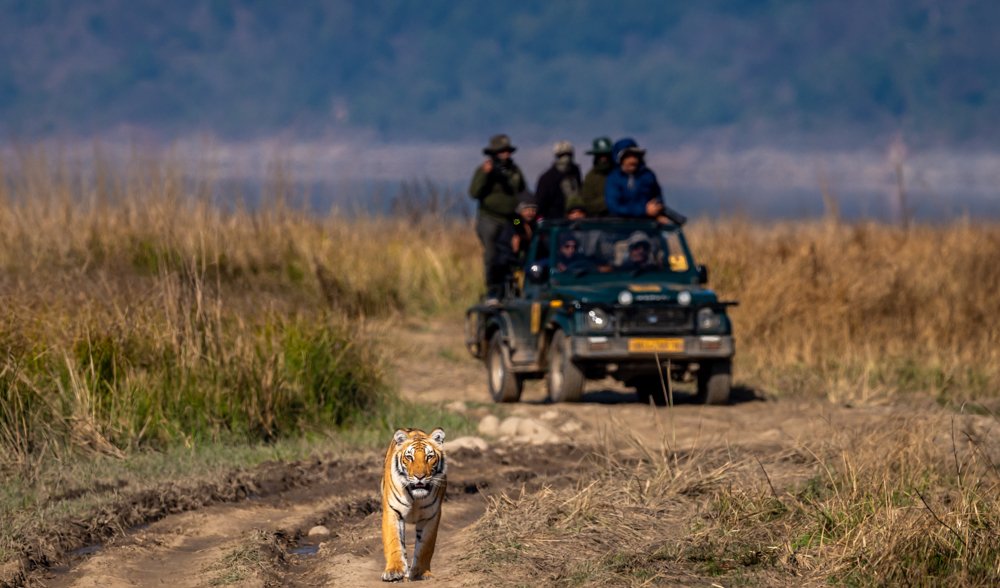
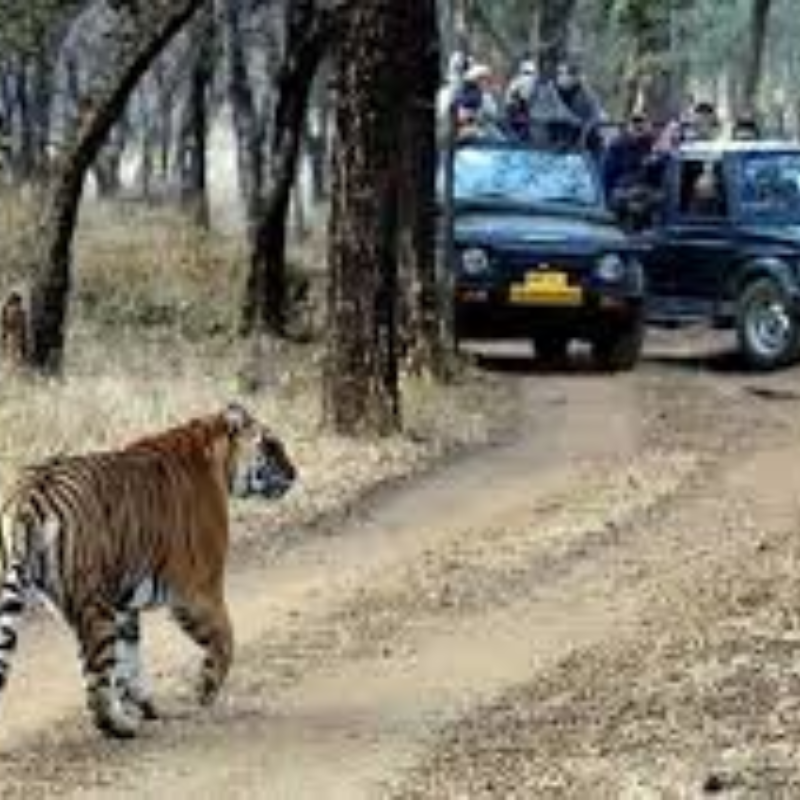
  • Jungle safaris can be done by exclusive jeeps, sharing jeeps, bigger vehicle : Like Canters, on elephant back and by premium jeeps etc. 5 persons can be comfortably accommodated in one jeep. Canters can carry 15 to 20 persons. Exclusive jeeps are best for 4 to 5 persons in a group. Sharing jeeps are value for money. Canters cab be used for persons on budget. Elephant safaris are mostly banned now. Also due to scarcity of elephants it is little difficult to elephant rides. Premium jeeps are available at few Parks on premium charges. At Periyar wildlife safaris can be done by boat only.
  • Exclusive Jeeps can be hired for full day also instead of morning and afternoon slots. However these are relatively quite expensive and are required for photography tours. Special permission is required, well in advance, from the Forest department and Govt of India for wildlife still and video photography if you wish to use advance equipment/ tripods for commercial or ad films.
  • Normal Govt. approved naturalists are provided by the forest department during the safaris. However their English communication may not be so good. With some extra charges better/ hand picked naturalists can be provided.
  • There are 2 safaris in a day. Normal safari timings are 5.30 to 10 AM and 2.30 PM to 5.30 PM. Howeverthis changes depending upon the Parks and winter and summer timings.
  • Mostly resorts with cottages are found in the Park areas, unlike high rise hotels with big inventories. Mostly all resorts are on full board (all 3 major meals) basis, as food options are not much in the park areas. However room +breakfast or half board options are also available.
  • Difference between Tiger Reserve, National Parks and Wildlife Sanctuary: While both tiger reserves and national parks focus on wildlife conservation, a tiger reserve is specifically designated for tiger conservation, and can include national parks or wildlife sanctuaries within its boundaries, while a national park aims to protect a broader range of flora, fauna, and ecosystems. So, a tiger reserve may also be a national park or wildlife sanctuary. For example the Sariska Tiger Reserve is also a national park.
  • Difference between Tiger Reserve, National Parks and Wildlife Sanctuary: While both tiger reserves and national parks focus on wildlife conservation, a tiger reserve is specifically designated for tiger conservation, and can include national parks or wildlife sanctuaries within its boundaries, while a national park aims to protect a broader range of flora, fauna, and ecosystems. So, a tiger reserve may also be a national park or wildlife sanctuary. For example the Sariska Tiger Reserve is also a national park.
  • The first national park was established in India in 1936. It was the Hailey National Park in Uttarakhand. Today, we know it as the Jim Corbett National Park. By 1970, we had only five national parks as below :
    • Jim Corbett National Park
    • Ranthambore National Park : 2 and half hours from Jaipur
    • Gir Forest National Park : Delhi – Diu : Fly and drive 2 and half hours. : State Gujrarat
    • Pench National Park : Fly to Nagpur and drive 3 hours to Pench
    • Sundarbans National Park : Fly to Kolkata, drive to Sonakhali or Canning and take a boat to Sunderbans. Or 2 nights / 3 days Cruise to Sunderbans.


Wildlife Sanctuary

A natural Geographical surrounding to safeguard wildlife. It can be upgraded to a National Park like Kaziranga national Park. Activities like cattle grazing and collecting forest products are allowed in such sanctuaries. There are 576 wild life Sanctuaries are there in India. Some of the popular ones are as below:

  • Bharatpur wildlife Sanctuary : For bird watching
  • Gir National Park and Wildlife Sanctuary
  • Madumalai Wildlife Sanctuary
  • Periyar wildlife sanctuary
  • Chilika Lake Bird Sanctuary

As of 2025, India has a total of 58 Tiger Reserves, established under Project Tiger to protect the endangered species and their habitat. The latest addition to the list is the Tatapani Tiger Reserve in Madhya Pradesh, which was declared the 58th Tiger Reserve in India in 2024.

  • Bandipur Tiger Reserve
  • Corbett National Park
  • Kanha National Park
  • Manas Wildlife Sanctuary : Fly Delhi / Kolkata to Guwahati (Assam - North East State) and drive 4 hours
  • Ranthambhore
  • Sunderbans National Park : West Bengal
  • Periyar Wildlife Sanctuary : Fly to Cochin and drive 5 hours to Periyar
  • Sariska : Rajasthan : 3 and half hours drive from Delhi
  • Dudwa National Park : Uttar Pradesh : 5 hours drive from Lucknow airport
  • Pench National Park
  • Tadoba, 3 and half hours drive from Nagpur airport
  • Bandhavgarh
  • Panna National Park
  • Annamalai National Park : 3 and half hours drive from Coimbatore airport
  • Nagarhole: 2 and half hours drive from Mysore airport
  • Tatapani National Park : One and half hours drive from Bhopal airport


For more detailed and specific information, please write, call or whatsapp to us on +91 9312286625, vidyanath_mishra@hotmail.com or travelcatalystt@gmail.com


Wildlife Tour


Day 1 : Mumbai/ Delhi - Nagpur–Pench Tiger Reserve

Met upon arrival at Nagpur airport and driven to Pench Tiger Reserve. Pench National Park, boasts of rich biodiversity and fascinating landscapes that inspired Rudyard Kipling's classic, "The Jungle Book." The park extends over Madhya Pradesh and Maharashtra, with its diverse flora and fauna, is a haven for wildlife enthusiasts and nature lovers alike.Pench National Park is home to the majestic Bengal tiger, Indian leopard, Indian wild dog (dhole), sloth bear, Indian gaur (bison), and various deer species. Avian enthusiasts canrevelinspottingover285birdspecies,includingthecrestedserpenteagle,Malabar pied hornbill, and Indian pitta, making it a paradise for bird-watchers.Arrive and check in to the resort for meals and overnightstay.


Day 2 : PenchTigerreserve : Morning and afternoon Game drive

Morning and after enjoy Jeep into the wildlife Park. Meals and overnight at the resort.


Day 3 : Pench Tiger reserve : Morning and afternoon game drive

Morning and after enjoy Jeep into the wildlife Park. Meals and overnight at the resort.


Day 4 : Pench–Tadoba National Park

After Breakfast drive overland for 5 hours to Tadoba National Park. It is probably Maharashtra's oldest and largest National Park, India's 47 project tiger reserves existing in India. According to the 2010 National Census on Tigers, there are about 43 tigers in the reserve, which is one of the highest in India. Wildlife here includes, Tigers, Indian leopards, Sloth bears, Gaur, Nilgai, Dhole, Striped Hyena, Small Indian Civet, Jungle Cats, Sambar, Spotted Deer, Barking Deer, Chital, Marsh Crocodile, Indian Python, Indian Cobra, Grey-headed Fish Eagle, Crested Serpent Eagle, Peacock, Jewel Beetles, Wolf Spiders, etc. Afternoon enjoy jeep safari into the Park. Overnight at the Resort.


Day 5 : Tadoba National Park

Morning and after enjoy Jeep into the wildlife Park. Meals and overnight at the resort.


Day 6 : Tadoba National Park

Morning and after enjoy Jeep into the wildlife Park. Meals and overnight at the resort.


Day 7 : Tadoba - Kanha National Park

After break-fast drive overland to Kanha National Park. Located in a central region of Madhya Pradesh, Kanha National Park is the largest National Park in central India and has been ranked as one of the best parks in Asia. Among the 22 species of large mammals, the royal Bengal tigers are one of the major attractions. It is one of the best tiger reserves in India. The park was established in the year 1955 and has since actively contributed to the preservationofmanyendangeredspecies.Kanha National Park houses one of the rarest species of deer- the Bara singha. It is known for the unique Bara singha conversation to save the species that wereonce on theverge of extinction. One of the most scenic wildlife reserves in Asia today, this National Park came to beknowntheworldoverthroughRudyardKipling'sbook-TheJungleBook. Arrive and checkintotheresort for meals and overnight stay.


Day 8 : KanhaNationalPark- Game drive

Morning and after enjoy Jeep into the wildlife Park. Meals and overnight at the resort.


Day 9 : Kanha National Park – Game drive

Morning and after enjoy Jeep into the wildlife Park. Meals and overnight at the resort.


Day 10 : Kanha-Bandhavgarh National Park

After breakfast drive overland to Bandhavgarh national park. Formerly a hunting ground for the Maharajas of Rewa, is world-renowned as a tiger reserve and it is known to have the highest density of Bengal tigers in the world. In 2012, around 44-49 tigers were living in the park. There are more than 22 species of mammals and 250 species of avifauna. The park got its name from the Bandhavgarh fort situated at the height of 800 m high cliffs nearby. Overnightstayatthe Resort.


Day 11 : Bandhavgarh National Park – Game drive

Morning and after enjoy Jeep into the wildlife Park. Meals and overnight at the resort.


Day 12 : Bandhavgarh National Park – Game drive

Morning and after enjoy Jeep into the wildlife Park. Meals and overnight at the resort.


Day 13 : Bandhavgarh National Park – Delhi

Morning drive 3 and half hours to Jabalpur airport to fly back to Delhi. Met and transferred to airport hotel.


Day 14 : International departure

On time transfer to International airport to fly back home

Extension Satpura Tiger Reserve

This tiger reserve comprises three protected areas, Satpura National Park, Bori Wildlife Sanctuary, and Pachmarhi Sanctuary. It is rich in biodiversity that includes a range of flora and fauna. Some of the animals that inhabit this landscape are sambar, leopard, chital, four-horned antelope, sloth bear, tiger, Indian Wild Dog, golden jackal, nilgai, gaur and wild boar among others. Some iconic birds include Malabar Pied Hornbill, Black Crested Bulbul, Osprey, Crested Hawk Eagle, Crested Serpent Eagle, Indian Skimmer and the like.

  • Day 1 : Arrive Pench tiger reserve
  • Day 2 : Pench Tiger reserve
  • Day 3 : Pench Tiger reserve
  • Day 4 : Pench – Satpura : Drive 4 hours overland
  • Day 5 : Satura Tiger Reserve
  • Day 6 : SatpuraTiver Reserve
  • Day 7 : Satpura -Kanha : Drive 5 and half hours overland
  • Day 8 : Same as above


This tiger reserve comprises three protected areas, Satpura National Park, Bori Wildlife Sanctuary, and Pachmarhi Sanctuary. It is rich in biodiversity that includes a range of flora and fauna. Some of the animals that inhabit this landscape are sambar, leopard, chital, four-horned antelope, sloth bear, tiger, Indian Wild Dog, golden jackal, nilgai, gaur and wild boar among others. Some iconic birds include Malabar Pied Hornbill, Black Crested Bulbul, Osprey, Crested Hawk Eagle, Crested Serpent Eagle, Indian Skimmer and the like.

Ranthambhore Tiger Reserve

Has a good number of Bengal tigers, a major draw for wildlife enthusiasts. Additionally, it is located within the historic Ranthambore Fort, a UNESCO World Heritage Site.

  • Day 1 : Delhi- Jaipur
  • Day 2 : Jaipur
  • Day 3 : Jaipur- Ranthambhore : Drive 3 and half hours
  • Day 4 : Ranthambhore
  • Day 5 : Ranthambhore – Agra – Drive 5 and half hours
  • Day 6 : SatpuraTiver Reserve
  • Day 7 : Agra – Delhi : 4 hours drive

Kaziranga National Park

Located in North Eastern state : One of the rate places to see edangered Indian one-horned rhinoceros, holding the largest population globally.

  • Day 1 : Delhi – Tezpur :Fly : Drive to Kaziranga National Park : One hours
  • Day 2 : Kaziranga National Park
  • Day 3 :Kaziranga to Nameri national Park : 2 and half hours
  • Day 4 :Nameri National Park : Change to see endangered species like white winged wood duck, Sloth Bear, Tiger Leopard, Clouded Leopard, Sambar, Gaur, Indian Wild Dog, four varieties of Hornbill
  • Day 5 :Nameri to Guwahati : Drive 4 and half hours Fly to Delhi or Kolkata

For more detailed and specific information on various other extensions, routing etc. please write, call or whatsApp to us on +91 9312286625, vidyanath_mishra@hotmail.com or travelcatalystt@gmail.com

Activities :
Bon fire, wildlife film screening, folk dances in the night are some of the regular activities that goes on in most of the resorts during the season time(Oct to Mar) However, Fort visits, rural, village jeep safaris, night safaris, Nature walks, canoing, boat rides, Bird watching, farm dinners, lecture on poaching and wildlife photograhy are some of the special activities that can be done while your stay at any national park.

For more detailed and specific information, please write, call or whatsapp to us on +91 9312286625, vidyanath_mishra@hotmail.com or travelcatalystt@gmail.com